
Soviets commissioned Jew Moshe Livshits to edit Holocaust video footage, resulting in world first documentary ‘Majdanek - Cemetery of Europe'

Quote from Timothy Fitzpatrick on June 4, 2026, 11:12With a raised head from Ford (Livshits)
May 20, 2026
Persecuted in Poland, he shone in the USSR. As a director, Alexander Ford was the first to show the world the hell of the Holocaust, entering the Majdanek concentration camp with the Red Army and Roman Carmen.
In April 1980, a maid found the body of an old man in an inconspicuous hotel room in Naples, Florida. Next to the bed lay a portable tape recorder, in which a reel with a tape slowly rotated. On the recording, which lasted about half an hour, a man with a heavy accent summed up his life, switching from English to Polish from time to time. The voice belonged to Alexander Ford, a man who once had absolute power over Polish cinema and determined which of the directors to work and which to go into oblivion. He was the first to show the world the hell of the Holocaust through the footage of the Maidanek death camp. And then he desperately tried to integrate into the system of power until this system overeated and spit out himself.
His real name is Moshe Livshits. He was born in 1908 in Kiev in a Jewish family, which soon moved to the Polish Lodz. Moshe's youth came at a time when cinema ceased to be an attraction and began to turn into the most powerful weapon of agitation. While studying art history at the University of Warsaw, the guy greedily absorbed the aesthetics of the avant-garde and left-wing ideas. For young Livshits, who saw the poverty of Jewish neighborhoods and social injustice, cinema seemed to be the only way to change the world. It was then that the pseudonym Alexander Ford appeared - in honor of the American king of conveyor production Henry Ford as a symbol of progress. Such is the paradox - the choice of a pseudonym in honor of the capitalist, known for his anti-Semitic views.
Ford's early works made him famous as a deep artist. In the thirties, he became the leader of the START group - an association of young idealists who believed that cinema should be "useful". In 1932, Ford released the film "Street Legion", where instead of scenery he used real slums of Warsaw, and made the heroes homeless boys who survive on the streets of a big city, selling newspapers. It was a revolutionary step for Polish cinema, accustomed to salon comedies and filming in pavilions. In 1933, Ford went to Palestine under the British mandate - and made there the film "Sabra" about Jewish settlers trying to establish a kibbutz in the desert. It was the first sound picture taken on the promised land. In addition to the conflict with nature, Ford showed clashes with the Arab population and introduced a line of love between a Jewish young man and an Arab girl. After the shooting, Ford found himself between two fires: the British authorities banned the picture, fearing that it would provoke Arab uprisings, and the customer producers were furious. Instead of a heroic commercial for immigrants, they got a complex author's drama, infinitely far from their expectations. Both demanded to reshoot a number of scenes, but Ford openly went into conflict. As a result, he was suspended from the final editing process, and he publicly renounced the result. His next Jewish project, the film "The World of Young People", also awaited failure. It was a poignant story about Jewish children building their little socialist utopia within the walls of the sanatorium. The Polish authorities considered the film "communist propaganda" and banned it from showing.
With the outbreak of World War II, Ford fled to the territory of the USSR - and his fate made a sharp turn: from a semi-underground left director, he turned into an official face of pro-Soviet Polish art. He was instructed to create a film service under the 1st Army of the Polish Army. In July 1944, together with Soviet front-line cameramen, including the legendary Roman Carmen, the director entered the liberated Maidanek. It was Ford who was commissioned to edit the footage of the film "Maidanek - the Cemetery of Europe" that shocked the world, showing gas chambers, mountains of human hair, children's shoes and gas cans "Cyclone B". It was a personal requiem for Ford. He understood that most of the Jewish children, whom he had filmed in a sanatorium a few years earlier for the "World of the Young", ended their journey in the same furnaces.
After the war, Ford returned to Poland as a colonel and became the head of the state organization Film Polski. Endowed with almost absolute power, he personally decided who was worthy of shooting and who should be excommunicated from the profession. The period from 1945 to 1947 was the time of his dictatorship in cinema. In particular, by his order, Anthony Bogdzevich's film "2x2=4" was completely destroyed. Ford considered a light comedy about young people "ideologically harmful" and empty. However, despite the censorship sieve, the party bonzes continued to accuse him of "ideological looseness", finding "blunders" in the materials that had already passed through him. The reputation of the "cinema king" was shaken by a failed plan to build cinemas, and the final chord was accusations of corruption in the sphere entrusted to him. Finding himself in disgrace and giving up his chair to the party functionary Stanislav Albrecht, Ford went to Prague, where he shot "Border Street" without a pre-approved scenario - a picture of the fate of Poles and Jews during the uprising in the Warsaw ghetto. The picture caused dissatisfaction with the authorities, who forced Ford to cut scenes of Polish anti-Semitism. The director gave in. The film received an award in Venice, but already at the Congress of Cinematographers in the Visla in 1949, where socialist realism was officially proclaimed, the film was again criticized for "insufficient emphasis on the role of the party", "excessive sentimentalism" and "nationalist bias".
To regain the trust of the party, Ford began to shoot ideologically verified canvases, approving the scenarios in advance and making the necessary adjustments. In 1951, he shot the film "Chopin's Youth", in which he flawlessly embodied all the doctrines proclaimed at the congress in the Visla. The complex biography of the great composer was simplified and rewritten - Chopin appeared on the screen primarily as a "friend of the working class". The calculation turned out to be correct: the party leadership greeted the film with an ovation, proclaiming Ford's work a standard of socialist realism. The director triumphantly returned to Olympus, again becoming an untouchable figure and the leading ideologist of Polish cinema.
The peak of his career in 1960 was "Crusaders", a grand blockbuster for the anniversary of the Battle of Grunwald based on the novel by Senkevich. It was the most expensive and mass film in the history of socialist Poland, and Ford himself gained the status of a national hero, becoming a kind of "Polish Eisenstein". His authority was so indisputable that he allowed himself audacity - he defended the debut of young Roman Polanski "Knife in the Water". Even when the leader of the country Gomulka furiously launched an ashtray at the screen while watching, Ford, showing rare foresight, insisted that such aesthetics is the future.
The collapse came suddenly. After the Six-Day War in the Middle East, a large-scale anti-Semitic campaign unfolded in Poland. Yesterday's classic and order who was branded a "zionist agent" overnight. His cherished project about Janush Korczak, who entered the gas chamber with his pupils, was closed with a cynical wording: "It's not the time to shoot about Jews". Deprived of posts and work, at the age of 60, Ford was actually squeezed out of the country. Emigration - first to Israel, then to Europe and the United States - became a protracted finale for him: in the West, his name, thundering in a socialist camp, meant little. Ford, accustomed to state budgets and thousands of crowds, could not fit into the market system, where it was necessary to fight for every cent and take into account the tastes of producers.
He tried to film "In the First Circle" by Alexander Solzhenitsyn, but the film failed. Solzhenitsyn himself harshly criticized Ford, publicly condemning him for his superficiality. The film "The Martyr" about Korchak, shot in Germany, did not have the success that Ford expected: critics considered the film old-fashioned and overly theatrical.
He tried for several more years to find money to film new scripts in the United States and Europe, but the reputation of a "director of failures" closed all doors to him. In addition, the young wife filed for divorce, taking the children away. Ford spent the last five years of his life in complete creative simplicity and solitude in a foreign country. The tape recording found in a Florida motel was his last script and confession. When the news of death reached Warsaw, the authorities reacted with icy silence - and ignored the petition to rebury his ashes in Poland.
With a raised head from Ford (Livshits)
May 20, 2026
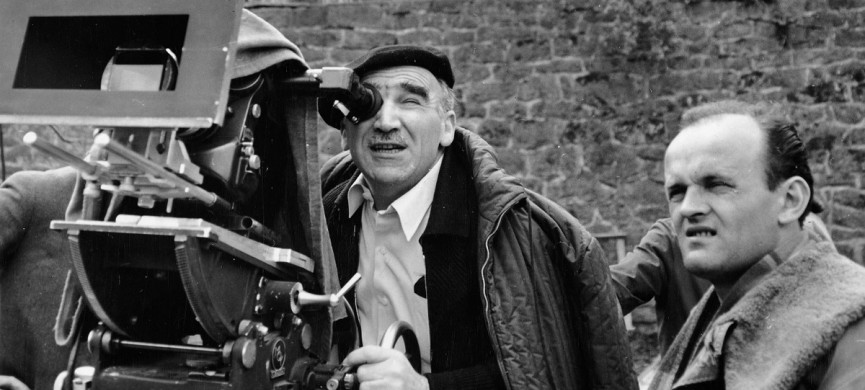
Persecuted in Poland, he shone in the USSR. As a director, Alexander Ford was the first to show the world the hell of the Holocaust, entering the Majdanek concentration camp with the Red Army and Roman Carmen.
In April 1980, a maid found the body of an old man in an inconspicuous hotel room in Naples, Florida. Next to the bed lay a portable tape recorder, in which a reel with a tape slowly rotated. On the recording, which lasted about half an hour, a man with a heavy accent summed up his life, switching from English to Polish from time to time. The voice belonged to Alexander Ford, a man who once had absolute power over Polish cinema and determined which of the directors to work and which to go into oblivion. He was the first to show the world the hell of the Holocaust through the footage of the Maidanek death camp. And then he desperately tried to integrate into the system of power until this system overeated and spit out himself.
His real name is Moshe Livshits. He was born in 1908 in Kiev in a Jewish family, which soon moved to the Polish Lodz. Moshe's youth came at a time when cinema ceased to be an attraction and began to turn into the most powerful weapon of agitation. While studying art history at the University of Warsaw, the guy greedily absorbed the aesthetics of the avant-garde and left-wing ideas. For young Livshits, who saw the poverty of Jewish neighborhoods and social injustice, cinema seemed to be the only way to change the world. It was then that the pseudonym Alexander Ford appeared - in honor of the American king of conveyor production Henry Ford as a symbol of progress. Such is the paradox - the choice of a pseudonym in honor of the capitalist, known for his anti-Semitic views.
Ford's early works made him famous as a deep artist. In the thirties, he became the leader of the START group - an association of young idealists who believed that cinema should be "useful". In 1932, Ford released the film "Street Legion", where instead of scenery he used real slums of Warsaw, and made the heroes homeless boys who survive on the streets of a big city, selling newspapers. It was a revolutionary step for Polish cinema, accustomed to salon comedies and filming in pavilions. In 1933, Ford went to Palestine under the British mandate - and made there the film "Sabra" about Jewish settlers trying to establish a kibbutz in the desert. It was the first sound picture taken on the promised land. In addition to the conflict with nature, Ford showed clashes with the Arab population and introduced a line of love between a Jewish young man and an Arab girl. After the shooting, Ford found himself between two fires: the British authorities banned the picture, fearing that it would provoke Arab uprisings, and the customer producers were furious. Instead of a heroic commercial for immigrants, they got a complex author's drama, infinitely far from their expectations. Both demanded to reshoot a number of scenes, but Ford openly went into conflict. As a result, he was suspended from the final editing process, and he publicly renounced the result. His next Jewish project, the film "The World of Young People", also awaited failure. It was a poignant story about Jewish children building their little socialist utopia within the walls of the sanatorium. The Polish authorities considered the film "communist propaganda" and banned it from showing.
With the outbreak of World War II, Ford fled to the territory of the USSR - and his fate made a sharp turn: from a semi-underground left director, he turned into an official face of pro-Soviet Polish art. He was instructed to create a film service under the 1st Army of the Polish Army. In July 1944, together with Soviet front-line cameramen, including the legendary Roman Carmen, the director entered the liberated Maidanek. It was Ford who was commissioned to edit the footage of the film "Maidanek - the Cemetery of Europe" that shocked the world, showing gas chambers, mountains of human hair, children's shoes and gas cans "Cyclone B". It was a personal requiem for Ford. He understood that most of the Jewish children, whom he had filmed in a sanatorium a few years earlier for the "World of the Young", ended their journey in the same furnaces.
After the war, Ford returned to Poland as a colonel and became the head of the state organization Film Polski. Endowed with almost absolute power, he personally decided who was worthy of shooting and who should be excommunicated from the profession. The period from 1945 to 1947 was the time of his dictatorship in cinema. In particular, by his order, Anthony Bogdzevich's film "2x2=4" was completely destroyed. Ford considered a light comedy about young people "ideologically harmful" and empty. However, despite the censorship sieve, the party bonzes continued to accuse him of "ideological looseness", finding "blunders" in the materials that had already passed through him. The reputation of the "cinema king" was shaken by a failed plan to build cinemas, and the final chord was accusations of corruption in the sphere entrusted to him. Finding himself in disgrace and giving up his chair to the party functionary Stanislav Albrecht, Ford went to Prague, where he shot "Border Street" without a pre-approved scenario - a picture of the fate of Poles and Jews during the uprising in the Warsaw ghetto. The picture caused dissatisfaction with the authorities, who forced Ford to cut scenes of Polish anti-Semitism. The director gave in. The film received an award in Venice, but already at the Congress of Cinematographers in the Visla in 1949, where socialist realism was officially proclaimed, the film was again criticized for "insufficient emphasis on the role of the party", "excessive sentimentalism" and "nationalist bias".
To regain the trust of the party, Ford began to shoot ideologically verified canvases, approving the scenarios in advance and making the necessary adjustments. In 1951, he shot the film "Chopin's Youth", in which he flawlessly embodied all the doctrines proclaimed at the congress in the Visla. The complex biography of the great composer was simplified and rewritten - Chopin appeared on the screen primarily as a "friend of the working class". The calculation turned out to be correct: the party leadership greeted the film with an ovation, proclaiming Ford's work a standard of socialist realism. The director triumphantly returned to Olympus, again becoming an untouchable figure and the leading ideologist of Polish cinema.
The peak of his career in 1960 was "Crusaders", a grand blockbuster for the anniversary of the Battle of Grunwald based on the novel by Senkevich. It was the most expensive and mass film in the history of socialist Poland, and Ford himself gained the status of a national hero, becoming a kind of "Polish Eisenstein". His authority was so indisputable that he allowed himself audacity - he defended the debut of young Roman Polanski "Knife in the Water". Even when the leader of the country Gomulka furiously launched an ashtray at the screen while watching, Ford, showing rare foresight, insisted that such aesthetics is the future.
The collapse came suddenly. After the Six-Day War in the Middle East, a large-scale anti-Semitic campaign unfolded in Poland. Yesterday's classic and order who was branded a "zionist agent" overnight. His cherished project about Janush Korczak, who entered the gas chamber with his pupils, was closed with a cynical wording: "It's not the time to shoot about Jews". Deprived of posts and work, at the age of 60, Ford was actually squeezed out of the country. Emigration - first to Israel, then to Europe and the United States - became a protracted finale for him: in the West, his name, thundering in a socialist camp, meant little. Ford, accustomed to state budgets and thousands of crowds, could not fit into the market system, where it was necessary to fight for every cent and take into account the tastes of producers.
He tried to film "In the First Circle" by Alexander Solzhenitsyn, but the film failed. Solzhenitsyn himself harshly criticized Ford, publicly condemning him for his superficiality. The film "The Martyr" about Korchak, shot in Germany, did not have the success that Ford expected: critics considered the film old-fashioned and overly theatrical.
He tried for several more years to find money to film new scripts in the United States and Europe, but the reputation of a "director of failures" closed all doors to him. In addition, the young wife filed for divorce, taking the children away. Ford spent the last five years of his life in complete creative simplicity and solitude in a foreign country. The tape recording found in a Florida motel was his last script and confession. When the news of death reached Warsaw, the authorities reacted with icy silence - and ignored the petition to rebury his ashes in Poland.
Share this:
- Share on X (Opens in new window) X
- Share on Facebook (Opens in new window) Facebook
- Share on Reddit (Opens in new window) Reddit
- Share on Tumblr (Opens in new window) Tumblr
- Share on Telegram (Opens in new window) Telegram
- Share on Bluesky (Opens in new window) Bluesky
- Share on Pinterest (Opens in new window) Pinterest
- Print (Opens in new window) Print
- Share on WhatsApp (Opens in new window) WhatsApp