
Putin's failed attempt to replicate the success of Israeli high-tech in Russia

Quote from Timothy Fitzpatrick on July 7, 2022, 20:28Putin's failed attempt to replicate the success of Israeli high-tech in Russia
In an effort to break away from total dependence on oil, Russia tried to connect with Israeli high-tech through ambitious projects that included a joint investment, a huge high-tech park and a plan to accelerate venture capital funds.
08.04.2022
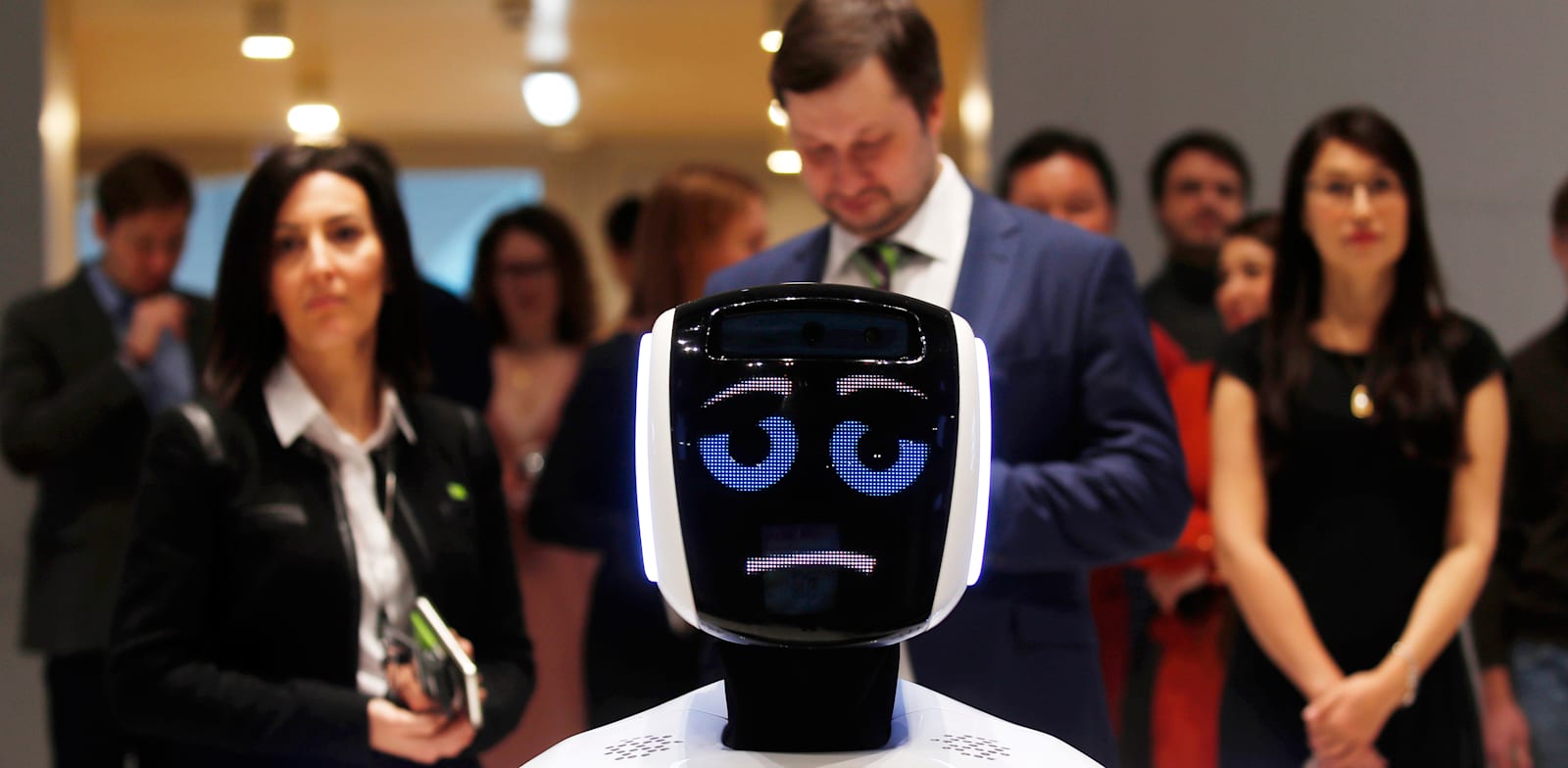 Presentation of a technology project in the high-tech chapter Skolkovo in Moscow / Photo: Reuters, Maxim Shemetov
Last month he resigned from the Kremlin and fled Russia from Anatoly Chubais, who in the 1990s was considered the privatization architect of the Russian economy and largely responsible for its sale of parts to oligarchs. Chubais, who began his career as a moderate economist in post-Soviet Russia and believed in development, has maintained close ties with the West until very recently.
The Israeli high-tech community Chubais also had a familiar name: before being ousted by Putin, he served as CEO and founder of the Rosnano Fund, the Russian government investment fund that a little over a decade ago was the next promising thing in Israeli high-tech.
Chubais came to Israel many times and headed delegations that came to be impressed by Israeli high-tech, and sought to invest in the most promising companies. Rosenano was one of three initiatives through which Russian industry tried to draw inspiration from Israeli high-tech. Meetings with Shimon Peres, Fouad Ben Eliezer, Shai Agassi and Amnon Shashua gave the feeling that this is happening - and the Russians are becoming partners in the success of the start-up Nation. But as of today nothing has come of it.
Russian President Vladimir Putin / Photo: Associated PressInitiative number 1When the president of the IEC becomes a high-tech investor
The Russian economy is based on high oil prices. In 2006-2007, when the price of a barrel of oil no longer stood at $ 100, Putin and the country's leaders - who were then at the height of its opening days to the West, sought additional sources of income for the Russian economy.
In 2007, Putin signed an order directing the establishment of Rosnano, an investment fund for technology companies with the intention of bringing the country into the world of start-ups, and accelerating the growth of the high-tech industry in Russia. All the conditions were there for success: government incentives, an extensive engineering and technological heritage and excellent universities.
Chubais, who until then had served as chairman of the Russian Electric Company, has been appointed director of the fund. He has been joined by Leonid Melamed, who has on several occasions served as head of the Israel Fund's delegation, and Jacob Orinson, a former Russian economy minister and bankrupt. Tel Aviv and Silicon Valley in the US as sites where it will operate outside of Russia and as sources of inspiration. Arkady Milman, Israel's ambassador to Russia in the 1990s, has been appointed CEO of Rosenno Israel.
Anatoly Chubais, Rosnano Foundation / Photo: Reuters, Evgenia NovozheninaThe budget, estimated at several billion dollars, was obtained by the fund through government guarantees raised by bonds in the Russian capital market - a risky mechanism. The Fitch rating agency recently downgraded Rosnano's bond rating to C, a “junk” bond, and earlier this month completely withdrew from the company’s future rating following the sanctions imposed on it.
Russian delegations in Better Place and Mobilai
Those who worked in the high-tech industry about a decade ago will not forget the many delegations on behalf of Rosenano that landed in Israel, the glittering events produced in their honor, the willingness to make large investment sums and the promises that seemed more optimistic than ever.
In the first years, agreements were signed with then-Minister Fouad Ben-Eliezer, who was the first in 2010 to get excited about the prospect of trading Israeli and Russian ideas. The Israeli chief scientist, together with the Russian Ministry of Industry, managed several small joint ventures, but the communication between the parties disintegrated two years ago with no visible results.
"On the face of it, the deals were done in a clean and orderly manner, with armies of lawyers going over every clause, everything was backed up by cumbersome and detailed agreements," says a senior official who was involved in one of Rosenano's investments. "Chubais was sitting at the top of a table that was three times longer than the famous desk in Putin's office, surrounded by dozens of officials, each with his own screen. It was very impressive."
Rosenano often conditioned his investment in an Israeli company on the establishment of a subsidiary in Russia and aroused interest, especially among companies that had difficulty finding financing and were fascinated by the means at their disposal. Such was the case of MCL from Tower Valley, which developed chip packaging systems. It raised $ 33 million in 2010 to set up a plant for its products in Russia, but after disagreements, the company separated forces with the Russian branch, which rolled out and became a lighting manufacturing company. Last year, Rosenano sold its stake for an unknown amount.
In 2012, Chubais sought to raise a profile for the foundation, adopting more Western work practices. He took advantage of Putin's visit to Israel that year to tour the best-growing startups, and even received investment opportunities from some of them. He visited Mobilai, two years before its initial public offering on NASDAQ; the chip company Tower, which only recently sold for $ 5.4 billion to Intel; Shay Agassi's Better Place, which at the time still looked like a promising company; '.
"Agassi did a great show for him," says a man who attended the meeting between them. But none of these investments have creamed skin and tendons. "The devil is in the small details," said the source who testified about the bureaucratic mechanism that made it difficult for the project to progress. "Rosenano worked like a government office with hundreds of officials and assistants. And you will not find a self-respecting venture capital fund that holds so many employees."
Shai Agassi, founder of Better Place / Photo: Eyal YitzharBottom line: Political conduct has wiped out the foundation
In 2015, Rosenano Israel again changed its investment model and decided to establish a partnership with the Chinese investment giant Qinghua Holdings. The two invested together in a number of Israeli start-ups such as ColorChip, Compass, Exjet, Scipio and Inkjet - most of which were sold at a loss or did not generate a sufficient return - and the mutual fund eventually disbanded due to disagreements.
The intention to invest $ 50 million in the catalyst fund of Eddie Kockerman, Yair Shamir and Boaz Harel also did not materialize in the end, despite press releases.
Over the years, senior officials in Russia have repeatedly encountered Russian law enforcement agencies - whether as a result of breaking the law or using the Russian legal system as a tool against its administrators. In 2013, the Russian prosecutor's office accused Chubais of not investing state funds in accordance with the fund's rules. In 2017, Rosenano's first director, Leonid Melamed, was arrested on the grounds that he had overdrawn the fund's money, and was released, according to Reuters. After the occupation of the Crimean peninsula by Russia in 2014, the West began to lose interest in the fund, and in 2019 its Israeli branch closed.
A year later, Chubais' education was in the eyes of Putin, who replaced him with his associate Sergei Kulikov, who was recently included in the EU sanctions list. Last December, as mentioned, Rosenano entered into insolvency proceedings. Russian economist Maxim Averbuch wrote in the recently closed newspaper Nuvia Gazette that "in Russia there is a chronic shortage of interest in innovation, with the economy revolving around the export of raw materials and subsidies from the country."
A man familiar with Rosenso's activities told Globes that "in retrospect much more could have been done, as there was goodwill there, but even Chubais was unable to break the political conduct of the system. Decisions were made and changed the next day at once without explanation. It is very difficult to take a model developed in the West and adapt it to the Russian reality. "
Initiative No. 2
An Israeli consultant and a promise to raise a billion dollars within an hour
Rosenano was not the only Russian initiative that sought to import Israeli high-tech into Russia. In 2006, Economy Minister Herman Graf, who currently runs the boycotted Sberbank, initiated the establishment of a huge fund that would create a series of private venture capital funds, with the aim of kick-starting the local high-tech industry. Before his eyes was the Israeli "Initiative" program, which invested $ 100 million in 10 Israeli venture capital funds, including Pitango, Viola and Giza in 1993, and helped launch the high-tech industry.
To this end, Graf invited Yigal Erlich, an architect of an initiative plan, to his office in Moscow. "Graph interrupted the meeting with Ehrlich to consult with Putin," said a man who was in the room at that meeting. "Ehrlich waited for him there for three hours. When Graf returned, he had the promise that the fund would be set up. He asked Ehrlich to advise the fund and informed him that he would raise $ 1 billion immediately. Ehrlich was fascinated by the speed with which everything happened, he tried to explain to them "A healthy fund works in a way that the money moves to it gradually - but it did not help him."
This is how the RVC (Russian Venture Company) fund was established. Its board consisted of ministers such as Graf, who was already a powerful Kremlin politician at the time, and Elvira Neviolina, who then served as trade minister and now serves as governor of the central bank.
With an Israeli advisor and an Israeli initiative, the Russian fund believed that investors would attack the opportunity to raise large amounts of capital and quickly, as the fund offered them. However, most of the offers that came to Russia were not serious, and Israeli venture capital funds that received a Russian commitment reported non-cooperation from the other side, an arbitrary business environment and non-compliance with pre-determined conditions.
Bottom line: "In the end they do what they want"
The politicization of the foundation never helped it. In 2014, Putin decided to remove the ministers from the RVC board and appointed him members of the academy. From a fund focused on establishing other venture capital funds, RVC has changed its face and become what those who know it call a "budget pit" for other technology ventures.
As in Brosno, senior members of the RVC Foundation suffered at the hands of the local security and police services. Russian startup founder Kiwi Sergei Solonin said in an interview with the Moscow Times at the time that he was "amazed by the country's terrible business environment", adding that the recent events are a deadly threat to the state-backed investment environment. "I have invested in RVC projects in the past, but given what has happened, it is hard to believe I will do so in the future."
"Ehrlich was a key advisor to the fund's managers but in the end they did what they wanted," says a person who knew the fund closely. "Israelis come with a certain perception that was difficult to put on a completely different business culture."Initiative No. 3
The grandiose high-tech park and the connection with Ariel University
Another technological venture to which the Russian government has sought to recruit Israelis is the huge high-tech park Skolkovo, a grandiose complex with an investment of $ 4 billion, which extends over 2.5 square kilometers on the outskirts of Moscow, a kind of hybrid between Silicon Valley and Matam Park.
According to the vision of then-Russian President Dmitry Medvedev, the park was to house hundreds of high-tech companies large and small that will employ 50,000 people by 2020.
Seemingly, the intentions were good. Russian high-tech enters a golden age: communications service provider Mail.ru was issued in London and Yandex made the largest recruitment on NASDAQ after Google.
Delegations from Russia traveled to Israel and the US, trying to entice entrepreneurs and companies to open operations in exchange for grants and tax breaks. A collaboration was reached between Skolkovo and MIT and Cisco, the American giant corporation whose global development strategy was then managed by the Israeli Yoav Samet, undertook to invest millions of dollars in the place.Skolkovo was headed by the Jewish oligarch Victor Wexelberg, who took advantage of his visits to Israel to promote Skolkovo. As the Israeli partner of the giant park, Ariel University and its commercialization company were finally selected in 2011 - which had faith in locating Israeli startups that would agree to establish operations in Moscow. Despite the two's public relations campaign, Globes has learned that the collaboration has never matured into a joint business or research activity.
Bottom line: Putin is fed up with the project and cut back
A year later, Putin returned to the post of Russian president and froze much of the budget for control. The political desire, together with the capital to encourage innovation, disappeared, with Medvedev himself. In 2013, government agents took over the offices of Skolkovo's management, and a number of senior officials were accused of embezzling Mossad funds due to an invitation by a Member of Parliament to paid lectures. The invasion of the Crimea and the Western sanctions against Russia that had already begun to take shape almost then closed Skolkovo to the west and a year later the company was asked to cut costs by 40%.
Last month, he resigned as head of Skolkovo's Arkady Dvorkovich, condemning the invasion of Ukraine.
"Russian high-tech has brought out to the knowledge of some huge companies, but the embrace of the government bear has harmed them and others. Venture capital cannot arise where government involvement is so great," says a senior venture capitalist. "The Israeli 'Initiative' program began as a government initiative to launch an activity that continued as private, but in Russia the investments remained governmental. In the end, it is very difficult to establish an independent fund in a totalitarian regime where everyone takes their liter of meat."
"At first we were optimistic - Russia is a big country with a huge market and technological education. But as time went on, it was revealed as a country with weak infrastructure, no real middle class and a bureaucratic and sometimes corrupt business environment," says a senior Russian investment official in Israel. "The Israelis eventually shied away from her."
Source: https://www.globes.co.il/news/article.aspx?did=1001408630
Putin's failed attempt to replicate the success of Israeli high-tech in Russia
In an effort to break away from total dependence on oil, Russia tried to connect with Israeli high-tech through ambitious projects that included a joint investment, a huge high-tech park and a plan to accelerate venture capital funds.
08.04.2022
Last month he resigned from the Kremlin and fled Russia from Anatoly Chubais, who in the 1990s was considered the privatization architect of the Russian economy and largely responsible for its sale of parts to oligarchs. Chubais, who began his career as a moderate economist in post-Soviet Russia and believed in development, has maintained close ties with the West until very recently.
The Israeli high-tech community Chubais also had a familiar name: before being ousted by Putin, he served as CEO and founder of the Rosnano Fund, the Russian government investment fund that a little over a decade ago was the next promising thing in Israeli high-tech.
Chubais came to Israel many times and headed delegations that came to be impressed by Israeli high-tech, and sought to invest in the most promising companies. Rosenano was one of three initiatives through which Russian industry tried to draw inspiration from Israeli high-tech. Meetings with Shimon Peres, Fouad Ben Eliezer, Shai Agassi and Amnon Shashua gave the feeling that this is happening - and the Russians are becoming partners in the success of the start-up Nation. But as of today nothing has come of it.

When the president of the IEC becomes a high-tech investor
The Russian economy is based on high oil prices. In 2006-2007, when the price of a barrel of oil no longer stood at $ 100, Putin and the country's leaders - who were then at the height of its opening days to the West, sought additional sources of income for the Russian economy.
In 2007, Putin signed an order directing the establishment of Rosnano, an investment fund for technology companies with the intention of bringing the country into the world of start-ups, and accelerating the growth of the high-tech industry in Russia. All the conditions were there for success: government incentives, an extensive engineering and technological heritage and excellent universities.
Chubais, who until then had served as chairman of the Russian Electric Company, has been appointed director of the fund. He has been joined by Leonid Melamed, who has on several occasions served as head of the Israel Fund's delegation, and Jacob Orinson, a former Russian economy minister and bankrupt. Tel Aviv and Silicon Valley in the US as sites where it will operate outside of Russia and as sources of inspiration. Arkady Milman, Israel's ambassador to Russia in the 1990s, has been appointed CEO of Rosenno Israel.
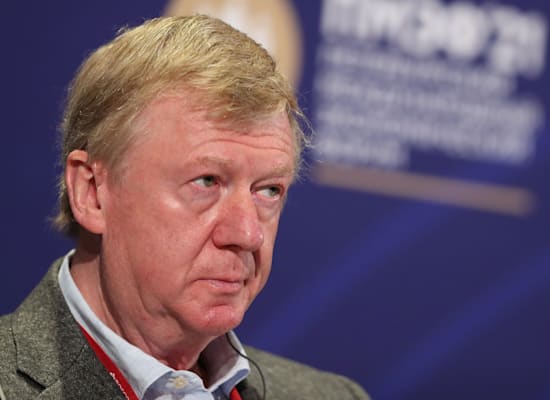
The budget, estimated at several billion dollars, was obtained by the fund through government guarantees raised by bonds in the Russian capital market - a risky mechanism. The Fitch rating agency recently downgraded Rosnano's bond rating to C, a “junk” bond, and earlier this month completely withdrew from the company’s future rating following the sanctions imposed on it.
Russian delegations in Better Place and Mobilai
Those who worked in the high-tech industry about a decade ago will not forget the many delegations on behalf of Rosenano that landed in Israel, the glittering events produced in their honor, the willingness to make large investment sums and the promises that seemed more optimistic than ever.
In the first years, agreements were signed with then-Minister Fouad Ben-Eliezer, who was the first in 2010 to get excited about the prospect of trading Israeli and Russian ideas. The Israeli chief scientist, together with the Russian Ministry of Industry, managed several small joint ventures, but the communication between the parties disintegrated two years ago with no visible results.
"On the face of it, the deals were done in a clean and orderly manner, with armies of lawyers going over every clause, everything was backed up by cumbersome and detailed agreements," says a senior official who was involved in one of Rosenano's investments. "Chubais was sitting at the top of a table that was three times longer than the famous desk in Putin's office, surrounded by dozens of officials, each with his own screen. It was very impressive."
Rosenano often conditioned his investment in an Israeli company on the establishment of a subsidiary in Russia and aroused interest, especially among companies that had difficulty finding financing and were fascinated by the means at their disposal. Such was the case of MCL from Tower Valley, which developed chip packaging systems. It raised $ 33 million in 2010 to set up a plant for its products in Russia, but after disagreements, the company separated forces with the Russian branch, which rolled out and became a lighting manufacturing company. Last year, Rosenano sold its stake for an unknown amount.
In 2012, Chubais sought to raise a profile for the foundation, adopting more Western work practices. He took advantage of Putin's visit to Israel that year to tour the best-growing startups, and even received investment opportunities from some of them. He visited Mobilai, two years before its initial public offering on NASDAQ; the chip company Tower, which only recently sold for $ 5.4 billion to Intel; Shay Agassi's Better Place, which at the time still looked like a promising company; '.
"Agassi did a great show for him," says a man who attended the meeting between them. But none of these investments have creamed skin and tendons. "The devil is in the small details," said the source who testified about the bureaucratic mechanism that made it difficult for the project to progress. "Rosenano worked like a government office with hundreds of officials and assistants. And you will not find a self-respecting venture capital fund that holds so many employees."
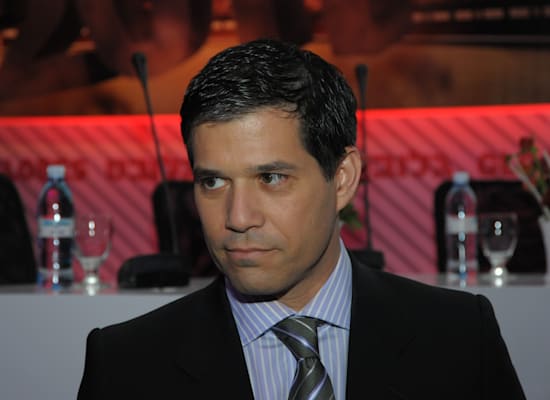
Bottom line: Political conduct has wiped out the foundation
In 2015, Rosenano Israel again changed its investment model and decided to establish a partnership with the Chinese investment giant Qinghua Holdings. The two invested together in a number of Israeli start-ups such as ColorChip, Compass, Exjet, Scipio and Inkjet - most of which were sold at a loss or did not generate a sufficient return - and the mutual fund eventually disbanded due to disagreements.
The intention to invest $ 50 million in the catalyst fund of Eddie Kockerman, Yair Shamir and Boaz Harel also did not materialize in the end, despite press releases.
Over the years, senior officials in Russia have repeatedly encountered Russian law enforcement agencies - whether as a result of breaking the law or using the Russian legal system as a tool against its administrators. In 2013, the Russian prosecutor's office accused Chubais of not investing state funds in accordance with the fund's rules. In 2017, Rosenano's first director, Leonid Melamed, was arrested on the grounds that he had overdrawn the fund's money, and was released, according to Reuters. After the occupation of the Crimean peninsula by Russia in 2014, the West began to lose interest in the fund, and in 2019 its Israeli branch closed.
A year later, Chubais' education was in the eyes of Putin, who replaced him with his associate Sergei Kulikov, who was recently included in the EU sanctions list. Last December, as mentioned, Rosenano entered into insolvency proceedings. Russian economist Maxim Averbuch wrote in the recently closed newspaper Nuvia Gazette that "in Russia there is a chronic shortage of interest in innovation, with the economy revolving around the export of raw materials and subsidies from the country."
A man familiar with Rosenso's activities told Globes that "in retrospect much more could have been done, as there was goodwill there, but even Chubais was unable to break the political conduct of the system. Decisions were made and changed the next day at once without explanation. It is very difficult to take a model developed in the West and adapt it to the Russian reality. "
Initiative No. 2
An Israeli consultant and a promise to raise a billion dollars within an hour
Rosenano was not the only Russian initiative that sought to import Israeli high-tech into Russia. In 2006, Economy Minister Herman Graf, who currently runs the boycotted Sberbank, initiated the establishment of a huge fund that would create a series of private venture capital funds, with the aim of kick-starting the local high-tech industry. Before his eyes was the Israeli "Initiative" program, which invested $ 100 million in 10 Israeli venture capital funds, including Pitango, Viola and Giza in 1993, and helped launch the high-tech industry.
To this end, Graf invited Yigal Erlich, an architect of an initiative plan, to his office in Moscow. "Graph interrupted the meeting with Ehrlich to consult with Putin," said a man who was in the room at that meeting. "Ehrlich waited for him there for three hours. When Graf returned, he had the promise that the fund would be set up. He asked Ehrlich to advise the fund and informed him that he would raise $ 1 billion immediately. Ehrlich was fascinated by the speed with which everything happened, he tried to explain to them "A healthy fund works in a way that the money moves to it gradually - but it did not help him."
This is how the RVC (Russian Venture Company) fund was established. Its board consisted of ministers such as Graf, who was already a powerful Kremlin politician at the time, and Elvira Neviolina, who then served as trade minister and now serves as governor of the central bank.
With an Israeli advisor and an Israeli initiative, the Russian fund believed that investors would attack the opportunity to raise large amounts of capital and quickly, as the fund offered them. However, most of the offers that came to Russia were not serious, and Israeli venture capital funds that received a Russian commitment reported non-cooperation from the other side, an arbitrary business environment and non-compliance with pre-determined conditions.
Bottom line: "In the end they do what they want"
The politicization of the foundation never helped it. In 2014, Putin decided to remove the ministers from the RVC board and appointed him members of the academy. From a fund focused on establishing other venture capital funds, RVC has changed its face and become what those who know it call a "budget pit" for other technology ventures.
As in Brosno, senior members of the RVC Foundation suffered at the hands of the local security and police services. Russian startup founder Kiwi Sergei Solonin said in an interview with the Moscow Times at the time that he was "amazed by the country's terrible business environment", adding that the recent events are a deadly threat to the state-backed investment environment. "I have invested in RVC projects in the past, but given what has happened, it is hard to believe I will do so in the future."
"Ehrlich was a key advisor to the fund's managers but in the end they did what they wanted," says a person who knew the fund closely. "Israelis come with a certain perception that was difficult to put on a completely different business culture."
Initiative No. 3
The grandiose high-tech park and the connection with Ariel University
Another technological venture to which the Russian government has sought to recruit Israelis is the huge high-tech park Skolkovo, a grandiose complex with an investment of $ 4 billion, which extends over 2.5 square kilometers on the outskirts of Moscow, a kind of hybrid between Silicon Valley and Matam Park.
According to the vision of then-Russian President Dmitry Medvedev, the park was to house hundreds of high-tech companies large and small that will employ 50,000 people by 2020.
Seemingly, the intentions were good. Russian high-tech enters a golden age: communications service provider Mail.ru was issued in London and Yandex made the largest recruitment on NASDAQ after Google.
Delegations from Russia traveled to Israel and the US, trying to entice entrepreneurs and companies to open operations in exchange for grants and tax breaks. A collaboration was reached between Skolkovo and MIT and Cisco, the American giant corporation whose global development strategy was then managed by the Israeli Yoav Samet, undertook to invest millions of dollars in the place.
Skolkovo was headed by the Jewish oligarch Victor Wexelberg, who took advantage of his visits to Israel to promote Skolkovo. As the Israeli partner of the giant park, Ariel University and its commercialization company were finally selected in 2011 - which had faith in locating Israeli startups that would agree to establish operations in Moscow. Despite the two's public relations campaign, Globes has learned that the collaboration has never matured into a joint business or research activity.
Bottom line: Putin is fed up with the project and cut back
A year later, Putin returned to the post of Russian president and froze much of the budget for control. The political desire, together with the capital to encourage innovation, disappeared, with Medvedev himself. In 2013, government agents took over the offices of Skolkovo's management, and a number of senior officials were accused of embezzling Mossad funds due to an invitation by a Member of Parliament to paid lectures. The invasion of the Crimea and the Western sanctions against Russia that had already begun to take shape almost then closed Skolkovo to the west and a year later the company was asked to cut costs by 40%.
Last month, he resigned as head of Skolkovo's Arkady Dvorkovich, condemning the invasion of Ukraine.
"Russian high-tech has brought out to the knowledge of some huge companies, but the embrace of the government bear has harmed them and others. Venture capital cannot arise where government involvement is so great," says a senior venture capitalist. "The Israeli 'Initiative' program began as a government initiative to launch an activity that continued as private, but in Russia the investments remained governmental. In the end, it is very difficult to establish an independent fund in a totalitarian regime where everyone takes their liter of meat."
"At first we were optimistic - Russia is a big country with a huge market and technological education. But as time went on, it was revealed as a country with weak infrastructure, no real middle class and a bureaucratic and sometimes corrupt business environment," says a senior Russian investment official in Israel. "The Israelis eventually shied away from her."
Source: https://www.globes.co.il/news/article.aspx?did=1001408630
Share this:
- Share on X (Opens in new window) X
- Share on Facebook (Opens in new window) Facebook
- Share on Reddit (Opens in new window) Reddit
- Share on Tumblr (Opens in new window) Tumblr
- Share on Telegram (Opens in new window) Telegram
- Share on Bluesky (Opens in new window) Bluesky
- Share on Pinterest (Opens in new window) Pinterest
- Print (Opens in new window) Print
- Share on WhatsApp (Opens in new window) WhatsApp