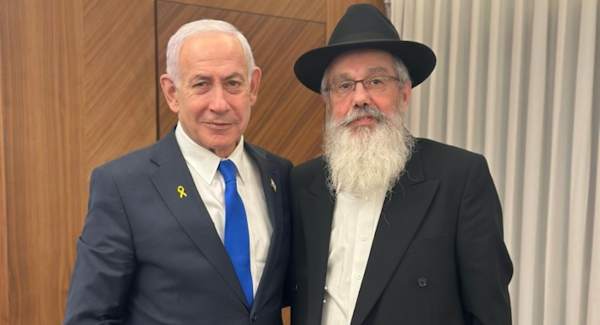
The alarm sirens on Saturday three weeks ago put Israel in a state of war. Everyone understands that we are talking about the "war of the Almighty against Amalek", but everyone perceives what is happening in their own way: soldiers at the front, civilians in the rear, which also became part of the front, and Jews abroad. Hasidim of HABAD have a special view of what is happening. Since the Rebbe King Moshiach announced that the time of Geula had come, everything that happens in the world is perceived as part of the Liberation process. When others focus on missiles and alarms, Hasidim see miracles and the approach of the disclosure of Moshiah.In a conversation with Rabbi David Nakhshon, it is emphasized that it is not just about words of reassurance, but about a holistic picture: everything that is happening is part of one process leading to final deliverance. Since the assumption of leadership, Rebe has said that the generation should lead Geula, and that major world events are part of this process. This has become especially evident since the early 1990s, when he said that the "most sublime time" had come and an active stage related to the activities of Moshiach among the peoples of the world had begun. Even wars, especially those related to Israel, are considered as part of the "wars of the Almighty". According to this view, there is a clear divine plan, and the one who understands it is not afraid of external events.Rabbi Nakhshon recalls that before the Six-Day War there was a strong panic in Israel. The country was full of Holocaust survivors who survived a terrible catastrophe just a quarter of a century ago, and when they saw Arab countries uniting to destroy us, they were preparing for the worst. About seventy thousand graves were prepared in the Negev then, God forbid! The American army sent ships to evacuate two thousand American citizens from here. People wanted to run. Rabbis and great sages of Israel, community leaders, said that it was allowed or even necessary to leave, and some even left themselves. Against this background, the Rebbe took the opposite position and categorically rejected the panic, confidently stating that there would be miracles. He sent encouraging telegrams and insisted not to change the usual course of life, not even to postpone weddings. As a result, there was an unexpected victory, and, according to Nakhshon, the Rebe spoke not as a person who hopes for the best, but as someone who sees the whole process in advance - like a prophet.In the following years, when relative calm reigned in the country, the Rebe, on the contrary, warned of danger. He strongly opposed the agreements that, in his opinion, allowed the enemy to strengthen, and described what was happening with great pain. In one of the speeches, he even cried, talking about a hidden threat. When most people did not expect war, he saw it approaching and called for spiritual actions, including mass prayers, especially with the participation of children. It seemed incomprehensible then, but soon the Doomsday War began, which caught many by surprise.
After this war, when the Israeli army stopped near Damascus, the Rebbe insisted that the city should be taken at least for a short time. He rejected military and political explanations for the refusal and linked it to prophecies about the future disclosure of Moshiah, explaining that such actions could facilitate this process. Years later, according to Nahshon, it can be seen that these issues still had to return, and serious threats, such as Syrian chemical weapons, were eliminated without direct damage to Israel, which is perceived as part of a chain of miracles.
In 1991, during the Gulf War, the Rebbe explained the prophecy of the "king of Persia" who enters the conflict and said that Israel should not be afraid because the time of Liberation has come. Then it referred to the events around Iraq, but today, according to Nahshon, it manifests itself even more clearly in the context of Iran. He believes that the current events are a continuation of the same process, but in a more open and understandable form. The world is experiencing unexpected and sometimes paradoxical events that indicate that everything is developing according to a certain higher plan.
A special place in the story is occupied by the topic of meetings with Benjamin Netanyahu. Rabbi Nahshon describes how the Rebbe gave different people different messages: one - specific political and military assessments, and Netanyahu himself - instructions related to the acceleration of the arrival of Moshiach.
It was during the distribution of dollars on the Sunday of the new moon of Kislev 5751. On that day, with a difference of only half an hour, r. Nahshon had the honor of introducing Rebe to two of his personal friends, prominent Israeli public figures: Mayor Ariel Ron Nachman and Benjamin (Bibi) Netanyahu, who was then Deputy Minister of Foreign Affairs. The difference between the messages that Rebe gave to each of them was great, and left r. Nakhshon is deeply confused.
Ron Nachman Rebe told clear political and military things. He told him that Iran and Syria were more dangerous than Saddam Hussein (who was then at the center of the Gulf War), and that they hate America even more than they hate Israel.
Half an hour later, Benjamin Netanyahu stood in front of the Rebe. The Rebe turned to him and said: "Since we last saw each other, several questions have been added, what was then and now, and while Moshiach hasn't come yet, then you have to do something to speed up his arrival." Netanyahu then replied: "We do, let's do...", and Rebe continued and demanded: "Probably not enough, because it's been several hours since the beginning of the day, but he still hasn't come; so we need to try today."
At that time, r. Nahshon asked himself: if the Iranian threat is so urgent and critical, why doesn't Rebe also talk about it with Netanyahu? After all, he is a man of propaganda like no one else in the world, he is the right person to convey a message! And so, it is with Netanyahu that Rebe chooses to talk about Moshiah, a topic that was not quite associated with him.
Every word of the Rebe is accurate. The question remains open: why Moshiach?
Rav Nakhshon says that last week he suddenly realized. This happened after he heard Netanyahu's speech at a press conference, where he said in connection with the current war: "This is our opportunity, which the Almighty gave us to return to our land... and in the end, we all say, we will come to peace and heritage, we will come to the days of Moshiach..." Suddenly everything became quite clear. Rebe didn't change the subject when he talked to Netanyahu, Rebe just looked at the long-term perspective much further.
Rabbi Nahshon believes that the Rebe actually entrusted Netanyahu with a special mission related to this struggle and the general process of Geula. He also claims that Netanyahu himself perceives the Rebbe as an outstanding person, even as a prophet, and takes into account his approach in his activities.
In practical terms, r. Nahshon urges not to succumb to fear, but to strengthen faith, joy and confidence, to engage in spiritual work and to focus on the inner meaning of what is happening, and not only on the news. According to him, excessive immersion in alarming information prevents us from seeing a broader picture.
As a result, he emphasizes that all the events taking place are part of a single process leading to the disclosure of Moshiach. A person should live with the feeling that it can happen at any time, and be ready for it. What looks like chaos and threat is seen in this perspective as a stage of preparation for the final Liberation.
The alarm sirens on Saturday three weeks ago put Israel in a state of war. Everyone understands that we are talking about the "war of the Almighty against Amalek", but everyone perceives what is happening in their own way: soldiers at the front, civilians in the rear, which also became part of the front, and Jews abroad. Hasidim of HABAD have a special view of what is happening. Since the Rebbe King Moshiach announced that the time of Geula had come, everything that happens in the world is perceived as part of the Liberation process. When others focus on missiles and alarms, Hasidim see miracles and the approach of the disclosure of Moshiah.In a conversation with Rabbi David Nakhshon, it is emphasized that it is not just about words of reassurance, but about a holistic picture: everything that is happening is part of one process leading to final deliverance. Since the assumption of leadership, Rebe has said that the generation should lead Geula, and that major world events are part of this process. This has become especially evident since the early 1990s, when he said that the "most sublime time" had come and an active stage related to the activities of Moshiach among the peoples of the world had begun. Even wars, especially those related to Israel, are considered as part of the "wars of the Almighty". According to this view, there is a clear divine plan, and the one who understands it is not afraid of external events.Rabbi Nakhshon recalls that before the Six-Day War there was a strong panic in Israel. The country was full of Holocaust survivors who survived a terrible catastrophe just a quarter of a century ago, and when they saw Arab countries uniting to destroy us, they were preparing for the worst. About seventy thousand graves were prepared in the Negev then, God forbid! The American army sent ships to evacuate two thousand American citizens from here. People wanted to run. Rabbis and great sages of Israel, community leaders, said that it was allowed or even necessary to leave, and some even left themselves. Against this background, the Rebbe took the opposite position and categorically rejected the panic, confidently stating that there would be miracles. He sent encouraging telegrams and insisted not to change the usual course of life, not even to postpone weddings. As a result, there was an unexpected victory, and, according to Nakhshon, the Rebe spoke not as a person who hopes for the best, but as someone who sees the whole process in advance - like a prophet.In the following years, when relative calm reigned in the country, the Rebe, on the contrary, warned of danger. He strongly opposed the agreements that, in his opinion, allowed the enemy to strengthen, and described what was happening with great pain. In one of the speeches, he even cried, talking about a hidden threat. When most people did not expect war, he saw it approaching and called for spiritual actions, including mass prayers, especially with the participation of children. It seemed incomprehensible then, but soon the Doomsday War began, which caught many by surprise.
After this war, when the Israeli army stopped near Damascus, the Rebbe insisted that the city should be taken at least for a short time. He rejected military and political explanations for the refusal and linked it to prophecies about the future disclosure of Moshiah, explaining that such actions could facilitate this process. Years later, according to Nahshon, it can be seen that these issues still had to return, and serious threats, such as Syrian chemical weapons, were eliminated without direct damage to Israel, which is perceived as part of a chain of miracles.
In 1991, during the Gulf War, the Rebbe explained the prophecy of the "king of Persia" who enters the conflict and said that Israel should not be afraid because the time of Liberation has come. Then it referred to the events around Iraq, but today, according to Nahshon, it manifests itself even more clearly in the context of Iran. He believes that the current events are a continuation of the same process, but in a more open and understandable form. The world is experiencing unexpected and sometimes paradoxical events that indicate that everything is developing according to a certain higher plan.
A special place in the story is occupied by the topic of meetings with Benjamin Netanyahu. Rabbi Nahshon describes how the Rebbe gave different people different messages: one - specific political and military assessments, and Netanyahu himself - instructions related to the acceleration of the arrival of Moshiach.
It was during the distribution of dollars on the Sunday of the new moon of Kislev 5751. On that day, with a difference of only half an hour, r. Nahshon had the honor of introducing Rebe to two of his personal friends, prominent Israeli public figures: Mayor Ariel Ron Nachman and Benjamin (Bibi) Netanyahu, who was then Deputy Minister of Foreign Affairs. The difference between the messages that Rebe gave to each of them was great, and left r. Nakhshon is deeply confused.
Ron Nachman Rebe told clear political and military things. He told him that Iran and Syria were more dangerous than Saddam Hussein (who was then at the center of the Gulf War), and that they hate America even more than they hate Israel.
Half an hour later, Benjamin Netanyahu stood in front of the Rebe. The Rebe turned to him and said: "Since we last saw each other, several questions have been added, what was then and now, and while Moshiach hasn't come yet, then you have to do something to speed up his arrival." Netanyahu then replied: "We do, let's do...", and Rebe continued and demanded: "Probably not enough, because it's been several hours since the beginning of the day, but he still hasn't come; so we need to try today."
At that time, r. Nahshon asked himself: if the Iranian threat is so urgent and critical, why doesn't Rebe also talk about it with Netanyahu? After all, he is a man of propaganda like no one else in the world, he is the right person to convey a message! And so, it is with Netanyahu that Rebe chooses to talk about Moshiah, a topic that was not quite associated with him.
Every word of the Rebe is accurate. The question remains open: why Moshiach?
Rav Nakhshon says that last week he suddenly realized. This happened after he heard Netanyahu's speech at a press conference, where he said in connection with the current war: "This is our opportunity, which the Almighty gave us to return to our land... and in the end, we all say, we will come to peace and heritage, we will come to the days of Moshiach..." Suddenly everything became quite clear. Rebe didn't change the subject when he talked to Netanyahu, Rebe just looked at the long-term perspective much further.
Rabbi Nahshon believes that the Rebe actually entrusted Netanyahu with a special mission related to this struggle and the general process of Geula. He also claims that Netanyahu himself perceives the Rebbe as an outstanding person, even as a prophet, and takes into account his approach in his activities.
In practical terms, r. Nahshon urges not to succumb to fear, but to strengthen faith, joy and confidence, to engage in spiritual work and to focus on the inner meaning of what is happening, and not only on the news. According to him, excessive immersion in alarming information prevents us from seeing a broader picture.
As a result, he emphasizes that all the events taking place are part of a single process leading to the disclosure of Moshiach. A person should live with the feeling that it can happen at any time, and be ready for it. What looks like chaos and threat is seen in this perspective as a stage of preparation for the final Liberation.


In the following years, when relative calm reigned in the country, the Rebe, on the contrary, warned of danger. He strongly opposed the agreements that, in his opinion, allowed the enemy to strengthen, and described what was happening with great pain. In one of the speeches, he even cried, talking about a hidden threat. When most people did not expect war, he saw it approaching and called for spiritual actions, including mass prayers, especially with the participation of children. It seemed incomprehensible then, but soon the Doomsday War began, which caught many by surprise.