"There are losers in the world": the chief rabbi of Russia - about anti-Semites, "world conspiracy" and Elon Musk's gesture
June 18, 2025
The Chief Rabbi of Russia declared "zero tolerance" for speeches against Jews
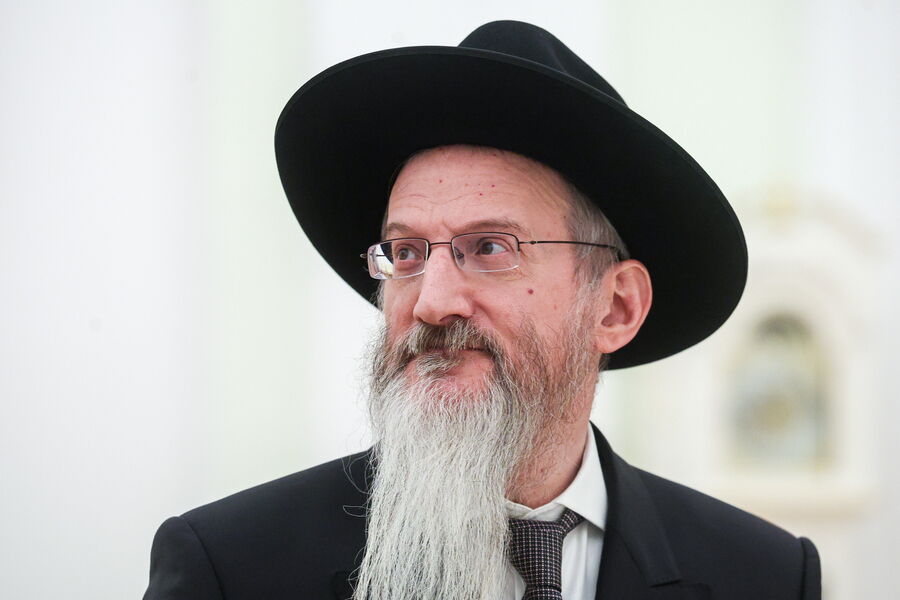
Chief Rabbi of Russia Berl LazarSofia Sandurskaya/TASS
How to fight anti-Semitism in the North Caucasus, whether there are Jews in the Russian authorities, why people still believe in a world Jewish conspiracy, and how the conflict in Ukraine influenced the communication between Ukrainian and Russian Jews - this and much more in an interview with Gazeta.Ru, Chief Rabbi of Russia Berl Lazar told about this and much more.
- Five years ago you said in an interview that 80% of Russian Jews are non-religious, "do not go to the synagogue, do not pray". At the same time, you are sure that they will "come sooner or later". Has the situation changed over the past time? - In recent years, we have seen that the interest in religious life among Russian Jews is growing. It cannot be said that this process has become explosive, but during these five years, people's ties with the Jewish community have really become closer. More people participate in Jewish holidays, more buy matzah on Passover, more religious weddings. I especially want to note the growing interest in spiritual values among young people: this is a good sign for us, because young people are our future. But we still have a lot of work left.
- How to encourage a modern Jew to come to the synagogue, to open the Torah? Is it more difficult for a Jew in the modern, mainly secular world to observe the necessary religious traditions, to preserve faith?
- People's interest in Judaism exists at the genetic, mental level, and cultural level. And our community in Russia, and especially in Moscow, is trying to meet this. Jews are more interested in their history, their culture, traditions of their people - and from here they come, including purely religious texts and rituals.
New technologies of delivery and information help us here in many ways. Of course, acquaintance with our tradition via the Internet is only the first step, only preparation for further integration into the community. But, thank God, it's much easier to integrate into the community now than it was in the very recent past. Our communities have been formed in almost all major cities of Russia, and in many smaller cities. So, taking into account all this, it has become much easier for a modern Jew in Russia to learn the Torah than before.
- After the seizure of the airport in Dagestan, you said that "it's not about Israel, our problem is the problem of education. Something has really changed in the North Caucasus. And not for the better." Are negative trends still there now?
- We record the growth of anti-Semitic and Judeophobic propaganda under the guise of anti-Israel, on the Internet, in social networks.
But the main thing here is how it spills out on the streets. The Makhachkala events showed that in Russia the threat of such a splash on the streets really exists.
But it is important here that law enforcement agencies and the Russian authorities as a whole have taken a clear and unambiguous position: zero tolerance for any manifestations of street anti-Semitism. We followed the consequences of the Makhachkala events with great attention and saw that the investigation was conducted at a very deep level, the organizers of the riots received serious criminal punishment, and now the situation in general is calm. And if something happens sometimes, these incidents are incomparable with the scale of anti-Semitic campaigns in Europe and the United States. I believe that the Russian law enforcement system is effective and copes with the situation.
And there are such programs in the North Caucasus. In April, I was in Dagestan, Derbent, participated in the laying of a unique spiritual complex of three religions, there will be a mosque, a Christian temple and a synagogue, museum halls, libraries. This is one of such important educational projects. I walked the streets there, met people - and, believe me, they are all very friendly, everyone wants to live in peace. Extremists are marginalized, which law enforcement agencies, I think, are quite capable of coping with.
- There is a Jewish Autonomous Region in Russia, known for the fact that there are almost no Jews there. How does the Jewish community feel about this paradox?
- There are Jews in EAO, there is a community center, there is a synagogue, and there is a wonderful rabbi Ephraim Kolpak. The community implements dozens of programs, including for children and youth, holds festivals of Jewish culture - in short, it grows and develops. And at the same time, it carefully preserves the history of this place.
I think few people know that in the late 1920s, during the creation of the Jewish region in the Far East, Jews from the USA, Africa, England came there. The Soviet government even considered the issues of quotas in order to reduce the flow of those wishing to get there. Jews from Ukraine and Belarus also went to Birobidzhan, it saved many from the Holocaust.
In the Jewish Autonomous Region there was a Jewish theater, publishing houses, artists and writers worked, Birobidzhan is not a curiosity at all. It did not become the edge of Jewish happiness, but the whole Soviet project was a utopia, and Birobidzhan was a part of it: the founders of the Jewish autonomy, enthusiasts, were shot in the thirties, the rest were finished in the 50s, during the "doctors' case" and other anti-Semitic trials.
Now in percentage terms, there are no fewer Jews there, although no more than in other regions.
- At the beginning of this year, FEOR President Alexander Boroda said that in fact all the Jews who had left the country since the beginning of hostilities in Ukraine had returned to Russia, and that we did not note any decrease in the Jews of Russia. Do you agree with this statement?
- In fact, we don't know the exact number of Jews in Russia. We can draw some conclusions only on the basis of Jewish participation in the work of our communities. In February 2022, we saw an outflow in big cities, but the situation quickly normalized. And now going abroad is not what it was in the last century, when it was a one-way ticket. Now people leave and come back, do business abroad and here, study abroad, work here and abroad. Just like in other countries.
But, returning to the issue of number, I will note an important indicator - our youth movement. I have already said that we pay special attention to youth programs, because this is a guarantee of our future. And I must tell you that the number of young guys who actively work in the community is increasing every year. Here's just one example. We have a program for young people to visit one of the diasporas annually, and this year we visited China. So: the number of participants in the trip (and these are all young activists from different communities) reached 800 people. This is more than in any of the past years.
- You were born and raised abroad, and came to Russia at the end of the Soviet era. Didn't you want to return abroad and work outside Russia?
- I came to Russia in 1990, but I came as a student before. And if in the 80s KGB agents followed us, then in the 90s I came to a free country. People filled the synagogues, it was possible to open schools calmly - it was a shock.
During all the time of working in Russia, neither my wife nor I have ever had a question about leaving. We came here on the instructions of our spiritual teacher, the Lubavitcher Rebbe, the meaning of our life and work here was obvious to us, and nothing could prevent it. We couldn't leave our post. And we also loved the people living here very much. I consider Russian Jews to be the most powerful community in the world. And, believe me, we are very comfortable here!
- Do you maintain contacts with Jewish communities in the West, have their policies and military actions in Ukraine been ircised?
- We maintain contacts with communities in the West, the East, and anywhere. We are a religious community, we have international activities related to a very wide range of issues. Understand, we are one people, so it is quite natural that we maintain and will maintain contacts with our brothers and sisters everywhere in the world.
- In the 90s, Russian Jews faced a shortage of kosher food. Are there any difficulties now?
- First of all, I want to emphasize that kosher products are exceptionally healthy and useful food. This is confirmed by all scientists specializing in nutrition, regardless of their religion. Therefore, it is clear that the solution to the problem of kosher food was initially very important for us. Now the entire cycle of kosher food production is local. We certify the products of Russian manufacturers, which are exported with a certificate of our rabbinate. And before that, all kosher food was Western or Israeli.
The production of products is not done by the community, it is done by businessmen who should benefit from it. And there are such businessmen, because, unlike the 90s, when the issue of kosher in Moscow was of interest to a couple of dozen families, now the number of consumers is measured in tens of thousands. There are Jewish religious schools and other institutions, there is a great demand for kosher food, a market has appeared. Dozens of companies turn to us every year with requests to check the kosher and issue the appropriate certificate. So it's economically profitable.
- Are there many Jews in prisons? What are they most often sentenced for? What kind of help does the community provide them?
- I won't name exact figures, the Jewish community has several dozen wards in places of deprivation of liberty. Most often in Russia, Jews find themselves there on charges of economic crimes.
Of course, the community is trying to help them. They receive religious literature, food kits for the holiday of Rosh A-Shanah (Jewish New Year) and matzah for Passover.
In Moscow, Jews in pre-trial detention centers can meet with a rabbi, take part in worship and Torah classes. There are a total of 12 synagogues in places of deprivation of liberty.
- Traditionally, it is believed that a woman in a Jewish family is engaged in the house and raising children, and a man earns money. Today, more and more women are making a career. How do you view such a change?
- The division of labor you are talking about: the wife runs the house, the husband earns money - it is not only Jewish. For many centuries, families of all nations have existed in this way. And there is nothing unnatural about it: after all, a woman gives birth to children, a woman feeds babies, here a man cannot replace her. A woman runs a house and a family, a man provides for a home and a family, this is quite a normal order of things.
Another thing is that in the process of economic development there are new opportunities for self-realization in both men and women. Now most Jewish women work, including in religious families. And we believe that this is progress, so they have time and opportunities for it. The main thing is that professional self-realization should not be at the expense of the role of women as the keeper of the house and family. Yes, there is a narrow range of professions "only for men", including in the religious sphere, but everything else is open for women.
- What is a Moscow eruv and what role did it play in the life of the community?
- First of all, let's figure out what eruv is. Our faith forbids many things on Shabbat, a religious Saturday. This day should be devoted to rest, prayer, taking care of the family. In particular, it is forbidden to carry any things from the house to the street, from the street to the house. The task is clear - it is that people do not have the temptation to buy, sell and do other activities of this kind on a day off. But since strict compliance with this prohibition creates certain inconveniences, they came up with something called "eruv" - it's as if we are fencing a certain territory, and it becomes a single space. They say that this gives more household comfort - for example, mothers can walk with strollers not only in their yard, but throughout the territory, which is declared "eruv".
Some communities organize this, and it is their right. I don't look at it very positively: in my opinion, it's better to use Shabbat for the tasks that God set.
- Why is the myth of a world Jewish conspiracy tenacious?
- A joke comes to mind: a Jew sits and reads the newspaper "Tomorrow". Neighbors are indigunt: what are you doing? I'd rather read a Jewish newspaper or magazine! Thank you, no need, our reader says: in Jewish newspapers everything is about problems - and we haven't solved it, and we still have to do it. And in this "Tomorrow" they write that we are the richest and have captured the whole world!
This is, of course, a joke, but in fact the myth of "Jewish conspiracy" or "Jewish domination" is tenacious simply because there are losers in the world who try to write off their incapacity to some "enemy force".
To prohibit such people from spreading their fictions, for example, through social networks is obviously hopeless. Therefore, we follow the positive path: we do not enter into useless discussions, but simply make the truth about us, about our faith, about our culture, about our people more accessible. Our synagogues are open to everyone, our Internet platforms invite everyone, our Jewish Museum carries out dozens of educational and educational projects. The more people have the opportunity to get objective information about us, the less faith in all kinds of anti-Semitic myths.
- Do Russian Jews maintain ties with Ukrainian ones and are there informal ties between Moscow and Kiev at a high political level in terms of the Jewish dialogue between the two countries?
- Personal connections, of course, are preserved. Historically, many Russian Jews have relatives in Ukraine. Simply because many Jews came to live in Russia from Ukraine after the abolition of the "settlement line", which was under the tsarist regime. And others were evacuated from Ukraine to the east in 1941 so as not to be in the hands of the Nazis. So Russian and Ukrainian Jews, in fact, are one people: they have always been friends and will continue to be friends.
As for the search for peace, we are always ready to contribute to this and have spoken about it openly, but details in such situations are superfluous.
- Are there many Jews in the Russian government and other supreme authorities? Does their religion affect politics in the country?
- Today, thank God, it's not Soviet times - they don't look at the "fifth point" when hiring. Therefore, Jews can be found in almost all professions: among doctors and scientists, among actors and engineers, among writers and businessmen. Well, of course, there are also Jews in the power structures, as well as representatives of other nationalities.
Does religion affect what these people do while working in the authorities? I don't think so. What really affects here is the commitment to eternal values that underlie all spirituality, including, of course, Jewish spirituality.
- What is the fundamental difference between Judaism and Christianity, and how to explain it to an ordinary person?
- As for the ideological foundations, all three Abrahamic religions - Judaism, Christianity and Islam - have one basis: faith in one God. We come from the same spiritual root, but our religious practices are different. Let the adherents of Christianity talk about Christianity, I do not consider myself entitled to make any comparisons.
As for the Jewish religion, in our religious practice the main emphasis is on two things: action and study. We have a lot of ritual actions, I think much more than in any direction of Christianity. And we are commanded to study the Holy Books all our lives without interruption - this is also, I think, a feature of Judaism.
- Not so long ago, the world was shaken by Elon Musk's strange gesture, similar to a Nazi greeting. How do you feel about this incident?
- I don't know what he meant, but a public figure, in my opinion, should always take into account how his words or gestures will be perceived by the public. I believe that this incident should have embarrassed Musk. And I hope the consequences have sobered him up in this regard.
It's not so important what Musk meant, it's important that people perceived it extremely negatively. And I hope that it will serve as a lesson for others.
"There are losers in the world": the chief rabbi of Russia - about anti-Semites, "world conspiracy" and Elon Musk's gesture
June 18, 2025
The Chief Rabbi of Russia declared "zero tolerance" for speeches against Jews
Chief Rabbi of Russia Berl LazarSofia Sandurskaya/TASS
How to fight anti-Semitism in the North Caucasus, whether there are Jews in the Russian authorities, why people still believe in a world Jewish conspiracy, and how the conflict in Ukraine influenced the communication between Ukrainian and Russian Jews - this and much more in an interview with Gazeta.Ru, Chief Rabbi of Russia Berl Lazar told about this and much more.
- Five years ago you said in an interview that 80% of Russian Jews are non-religious, "do not go to the synagogue, do not pray". At the same time, you are sure that they will "come sooner or later". Has the situation changed over the past time? - In recent years, we have seen that the interest in religious life among Russian Jews is growing. It cannot be said that this process has become explosive, but during these five years, people's ties with the Jewish community have really become closer. More people participate in Jewish holidays, more buy matzah on Passover, more religious weddings. I especially want to note the growing interest in spiritual values among young people: this is a good sign for us, because young people are our future. But we still have a lot of work left.
- How to encourage a modern Jew to come to the synagogue, to open the Torah? Is it more difficult for a Jew in the modern, mainly secular world to observe the necessary religious traditions, to preserve faith?
- People's interest in Judaism exists at the genetic, mental level, and cultural level. And our community in Russia, and especially in Moscow, is trying to meet this. Jews are more interested in their history, their culture, traditions of their people - and from here they come, including purely religious texts and rituals.
New technologies of delivery and information help us here in many ways. Of course, acquaintance with our tradition via the Internet is only the first step, only preparation for further integration into the community. But, thank God, it's much easier to integrate into the community now than it was in the very recent past. Our communities have been formed in almost all major cities of Russia, and in many smaller cities. So, taking into account all this, it has become much easier for a modern Jew in Russia to learn the Torah than before.
- After the seizure of the airport in Dagestan, you said that "it's not about Israel, our problem is the problem of education. Something has really changed in the North Caucasus. And not for the better." Are negative trends still there now?
- We record the growth of anti-Semitic and Judeophobic propaganda under the guise of anti-Israel, on the Internet, in social networks.
But the main thing here is how it spills out on the streets. The Makhachkala events showed that in Russia the threat of such a splash on the streets really exists.
But it is important here that law enforcement agencies and the Russian authorities as a whole have taken a clear and unambiguous position: zero tolerance for any manifestations of street anti-Semitism. We followed the consequences of the Makhachkala events with great attention and saw that the investigation was conducted at a very deep level, the organizers of the riots received serious criminal punishment, and now the situation in general is calm. And if something happens sometimes, these incidents are incomparable with the scale of anti-Semitic campaigns in Europe and the United States. I believe that the Russian law enforcement system is effective and copes with the situation.
And there are such programs in the North Caucasus. In April, I was in Dagestan, Derbent, participated in the laying of a unique spiritual complex of three religions, there will be a mosque, a Christian temple and a synagogue, museum halls, libraries. This is one of such important educational projects. I walked the streets there, met people - and, believe me, they are all very friendly, everyone wants to live in peace. Extremists are marginalized, which law enforcement agencies, I think, are quite capable of coping with.
- There is a Jewish Autonomous Region in Russia, known for the fact that there are almost no Jews there. How does the Jewish community feel about this paradox?
- There are Jews in EAO, there is a community center, there is a synagogue, and there is a wonderful rabbi Ephraim Kolpak. The community implements dozens of programs, including for children and youth, holds festivals of Jewish culture - in short, it grows and develops. And at the same time, it carefully preserves the history of this place.
I think few people know that in the late 1920s, during the creation of the Jewish region in the Far East, Jews from the USA, Africa, England came there. The Soviet government even considered the issues of quotas in order to reduce the flow of those wishing to get there. Jews from Ukraine and Belarus also went to Birobidzhan, it saved many from the Holocaust.
In the Jewish Autonomous Region there was a Jewish theater, publishing houses, artists and writers worked, Birobidzhan is not a curiosity at all. It did not become the edge of Jewish happiness, but the whole Soviet project was a utopia, and Birobidzhan was a part of it: the founders of the Jewish autonomy, enthusiasts, were shot in the thirties, the rest were finished in the 50s, during the "doctors' case" and other anti-Semitic trials.
Now in percentage terms, there are no fewer Jews there, although no more than in other regions.
- At the beginning of this year, FEOR President Alexander Boroda said that in fact all the Jews who had left the country since the beginning of hostilities in Ukraine had returned to Russia, and that we did not note any decrease in the Jews of Russia. Do you agree with this statement?
- In fact, we don't know the exact number of Jews in Russia. We can draw some conclusions only on the basis of Jewish participation in the work of our communities. In February 2022, we saw an outflow in big cities, but the situation quickly normalized. And now going abroad is not what it was in the last century, when it was a one-way ticket. Now people leave and come back, do business abroad and here, study abroad, work here and abroad. Just like in other countries.
But, returning to the issue of number, I will note an important indicator - our youth movement. I have already said that we pay special attention to youth programs, because this is a guarantee of our future. And I must tell you that the number of young guys who actively work in the community is increasing every year. Here's just one example. We have a program for young people to visit one of the diasporas annually, and this year we visited China. So: the number of participants in the trip (and these are all young activists from different communities) reached 800 people. This is more than in any of the past years.
- You were born and raised abroad, and came to Russia at the end of the Soviet era. Didn't you want to return abroad and work outside Russia?
- I came to Russia in 1990, but I came as a student before. And if in the 80s KGB agents followed us, then in the 90s I came to a free country. People filled the synagogues, it was possible to open schools calmly - it was a shock.
During all the time of working in Russia, neither my wife nor I have ever had a question about leaving. We came here on the instructions of our spiritual teacher, the Lubavitcher Rebbe, the meaning of our life and work here was obvious to us, and nothing could prevent it. We couldn't leave our post. And we also loved the people living here very much. I consider Russian Jews to be the most powerful community in the world. And, believe me, we are very comfortable here!
- Do you maintain contacts with Jewish communities in the West, have their policies and military actions in Ukraine been ircised?
- We maintain contacts with communities in the West, the East, and anywhere. We are a religious community, we have international activities related to a very wide range of issues. Understand, we are one people, so it is quite natural that we maintain and will maintain contacts with our brothers and sisters everywhere in the world.
- In the 90s, Russian Jews faced a shortage of kosher food. Are there any difficulties now?
- First of all, I want to emphasize that kosher products are exceptionally healthy and useful food. This is confirmed by all scientists specializing in nutrition, regardless of their religion. Therefore, it is clear that the solution to the problem of kosher food was initially very important for us. Now the entire cycle of kosher food production is local. We certify the products of Russian manufacturers, which are exported with a certificate of our rabbinate. And before that, all kosher food was Western or Israeli.
The production of products is not done by the community, it is done by businessmen who should benefit from it. And there are such businessmen, because, unlike the 90s, when the issue of kosher in Moscow was of interest to a couple of dozen families, now the number of consumers is measured in tens of thousands. There are Jewish religious schools and other institutions, there is a great demand for kosher food, a market has appeared. Dozens of companies turn to us every year with requests to check the kosher and issue the appropriate certificate. So it's economically profitable.
- Are there many Jews in prisons? What are they most often sentenced for? What kind of help does the community provide them?
- I won't name exact figures, the Jewish community has several dozen wards in places of deprivation of liberty. Most often in Russia, Jews find themselves there on charges of economic crimes.
Of course, the community is trying to help them. They receive religious literature, food kits for the holiday of Rosh A-Shanah (Jewish New Year) and matzah for Passover.
In Moscow, Jews in pre-trial detention centers can meet with a rabbi, take part in worship and Torah classes. There are a total of 12 synagogues in places of deprivation of liberty.
- Traditionally, it is believed that a woman in a Jewish family is engaged in the house and raising children, and a man earns money. Today, more and more women are making a career. How do you view such a change?
- The division of labor you are talking about: the wife runs the house, the husband earns money - it is not only Jewish. For many centuries, families of all nations have existed in this way. And there is nothing unnatural about it: after all, a woman gives birth to children, a woman feeds babies, here a man cannot replace her. A woman runs a house and a family, a man provides for a home and a family, this is quite a normal order of things.
Another thing is that in the process of economic development there are new opportunities for self-realization in both men and women. Now most Jewish women work, including in religious families. And we believe that this is progress, so they have time and opportunities for it. The main thing is that professional self-realization should not be at the expense of the role of women as the keeper of the house and family. Yes, there is a narrow range of professions "only for men", including in the religious sphere, but everything else is open for women.
- What is a Moscow eruv and what role did it play in the life of the community?
- First of all, let's figure out what eruv is. Our faith forbids many things on Shabbat, a religious Saturday. This day should be devoted to rest, prayer, taking care of the family. In particular, it is forbidden to carry any things from the house to the street, from the street to the house. The task is clear - it is that people do not have the temptation to buy, sell and do other activities of this kind on a day off. But since strict compliance with this prohibition creates certain inconveniences, they came up with something called "eruv" - it's as if we are fencing a certain territory, and it becomes a single space. They say that this gives more household comfort - for example, mothers can walk with strollers not only in their yard, but throughout the territory, which is declared "eruv".
Some communities organize this, and it is their right. I don't look at it very positively: in my opinion, it's better to use Shabbat for the tasks that God set.
- Why is the myth of a world Jewish conspiracy tenacious?
- A joke comes to mind: a Jew sits and reads the newspaper "Tomorrow". Neighbors are indigunt: what are you doing? I'd rather read a Jewish newspaper or magazine! Thank you, no need, our reader says: in Jewish newspapers everything is about problems - and we haven't solved it, and we still have to do it. And in this "Tomorrow" they write that we are the richest and have captured the whole world!
This is, of course, a joke, but in fact the myth of "Jewish conspiracy" or "Jewish domination" is tenacious simply because there are losers in the world who try to write off their incapacity to some "enemy force".
To prohibit such people from spreading their fictions, for example, through social networks is obviously hopeless. Therefore, we follow the positive path: we do not enter into useless discussions, but simply make the truth about us, about our faith, about our culture, about our people more accessible. Our synagogues are open to everyone, our Internet platforms invite everyone, our Jewish Museum carries out dozens of educational and educational projects. The more people have the opportunity to get objective information about us, the less faith in all kinds of anti-Semitic myths.
- Do Russian Jews maintain ties with Ukrainian ones and are there informal ties between Moscow and Kiev at a high political level in terms of the Jewish dialogue between the two countries?
- Personal connections, of course, are preserved. Historically, many Russian Jews have relatives in Ukraine. Simply because many Jews came to live in Russia from Ukraine after the abolition of the "settlement line", which was under the tsarist regime. And others were evacuated from Ukraine to the east in 1941 so as not to be in the hands of the Nazis. So Russian and Ukrainian Jews, in fact, are one people: they have always been friends and will continue to be friends.
As for the search for peace, we are always ready to contribute to this and have spoken about it openly, but details in such situations are superfluous.
- Are there many Jews in the Russian government and other supreme authorities? Does their religion affect politics in the country?
- Today, thank God, it's not Soviet times - they don't look at the "fifth point" when hiring. Therefore, Jews can be found in almost all professions: among doctors and scientists, among actors and engineers, among writers and businessmen. Well, of course, there are also Jews in the power structures, as well as representatives of other nationalities.
Does religion affect what these people do while working in the authorities? I don't think so. What really affects here is the commitment to eternal values that underlie all spirituality, including, of course, Jewish spirituality.
- What is the fundamental difference between Judaism and Christianity, and how to explain it to an ordinary person?
- As for the ideological foundations, all three Abrahamic religions - Judaism, Christianity and Islam - have one basis: faith in one God. We come from the same spiritual root, but our religious practices are different. Let the adherents of Christianity talk about Christianity, I do not consider myself entitled to make any comparisons.
As for the Jewish religion, in our religious practice the main emphasis is on two things: action and study. We have a lot of ritual actions, I think much more than in any direction of Christianity. And we are commanded to study the Holy Books all our lives without interruption - this is also, I think, a feature of Judaism.
- Not so long ago, the world was shaken by Elon Musk's strange gesture, similar to a Nazi greeting. How do you feel about this incident?
- I don't know what he meant, but a public figure, in my opinion, should always take into account how his words or gestures will be perceived by the public. I believe that this incident should have embarrassed Musk. And I hope the consequences have sobered him up in this regard.
It's not so important what Musk meant, it's important that people perceived it extremely negatively. And I hope that it will serve as a lesson for others.