When Nvidia acquired the Israeli company Mellanox Technologies for $6.9 billion in 2020, the deal seemed more like an addition to the main business of the graphics card manufacturer. At that time, analysts said that the American giant was getting access to high-speed connection technologies between servers, but no one saw a future coup in this. Today it is clear: it was this acquisition that became a turning point in the history of Nvidia, turning the company from the leader of graphics processors into architects of the infrastructure of the global artificial intelligence industry.
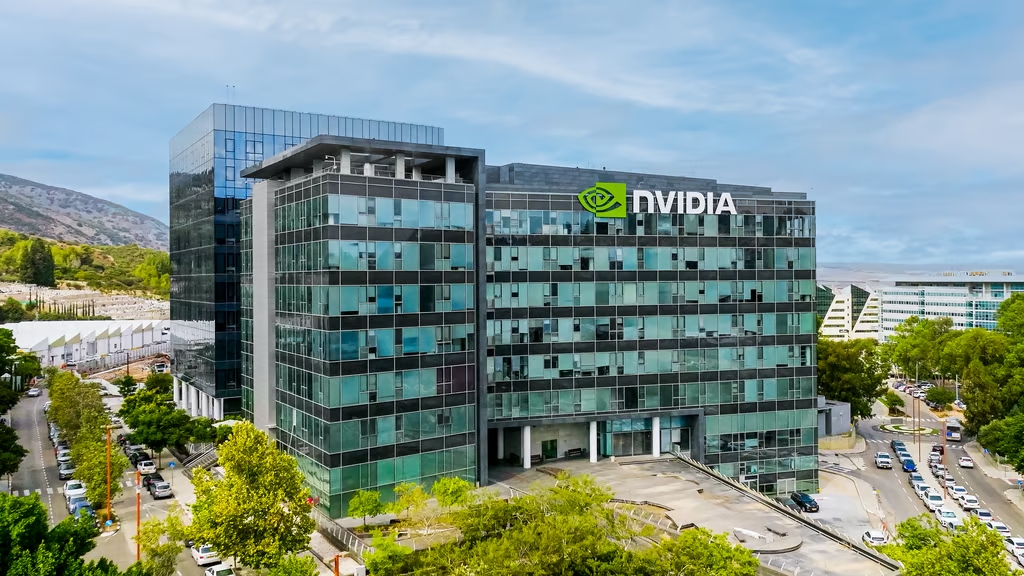
Nvidia Israeli Center in Yokneam.Provided by: NVIDIA
In the second quarter of 2025, Nvidia's network division brought in $7.25 billion - more than the entire purchase amount of Mellanox, and in just one quarter. On an annual basis, we are talking about 25-30 billion dollars, and this is already comparable to the revenue of large independent technology companies. Officially, the direction is called "Networking", but in fact it is about the activities of the Israeli center in Yokneam. It is here that solutions for communication between chips and servers, processors for data centers, on-chip systems for robotics and cars, as well as algorithms for autonomous driving and even new language models are created. According to experts, the real contribution of Israeli engineers may account for up to a fifth of Nvidia's total revenue.
The biggest technological breakthrough in recent years has also come out of Israel. The Spectrum-XGS platform developed there allows you to connect data centers located in different countries and even on different continents into a single system. What used to be limited to the walls of one campus is now turning into "AI factories" on a global scale. This technology removes the problem of delays and bottlenecks that have long interfered with distributed computing. Now several centers can work as a single supercomputer, and it is this idea that becomes the key to the new artificial intelligence architecture.
The company confirms the seriousness of intentions in Israel: the construction of a giant campus in the north of the country has already been announced. Within five to six years, it should become the largest private employer facility in Israel and focus on Nvidia's main areas of work. Of the four key product lines of the company of the near future, three are being developed in Yokneam, which turns this city into one of the centers of the world digital economy.
The story of Mellanox is the story of how an Israeli engineering school managed to grow a global company from a local startup. Founded by Eyal Waldman, it started with a narrow specialization - high-performance network solutions. But it was its InfiniBand technologies that became an integral part of supercomputers, research clusters, and then giant farms for training neural networks. Today it is already obvious that without Mellanox Nvidia would not have become a four-trillion giant, and Israel from the "country of startups" has turned into a reference node of the industrial revolution of artificial intelligence.
When Nvidia acquired the Israeli company Mellanox Technologies for $6.9 billion in 2020, the deal seemed more like an addition to the main business of the graphics card manufacturer. At that time, analysts said that the American giant was getting access to high-speed connection technologies between servers, but no one saw a future coup in this. Today it is clear: it was this acquisition that became a turning point in the history of Nvidia, turning the company from the leader of graphics processors into architects of the infrastructure of the global artificial intelligence industry.
Nvidia Israeli Center in Yokneam.Provided by: NVIDIA
In the second quarter of 2025, Nvidia's network division brought in $7.25 billion - more than the entire purchase amount of Mellanox, and in just one quarter. On an annual basis, we are talking about 25-30 billion dollars, and this is already comparable to the revenue of large independent technology companies. Officially, the direction is called "Networking", but in fact it is about the activities of the Israeli center in Yokneam. It is here that solutions for communication between chips and servers, processors for data centers, on-chip systems for robotics and cars, as well as algorithms for autonomous driving and even new language models are created. According to experts, the real contribution of Israeli engineers may account for up to a fifth of Nvidia's total revenue.
The biggest technological breakthrough in recent years has also come out of Israel. The Spectrum-XGS platform developed there allows you to connect data centers located in different countries and even on different continents into a single system. What used to be limited to the walls of one campus is now turning into "AI factories" on a global scale. This technology removes the problem of delays and bottlenecks that have long interfered with distributed computing. Now several centers can work as a single supercomputer, and it is this idea that becomes the key to the new artificial intelligence architecture.
The company confirms the seriousness of intentions in Israel: the construction of a giant campus in the north of the country has already been announced. Within five to six years, it should become the largest private employer facility in Israel and focus on Nvidia's main areas of work. Of the four key product lines of the company of the near future, three are being developed in Yokneam, which turns this city into one of the centers of the world digital economy.
The story of Mellanox is the story of how an Israeli engineering school managed to grow a global company from a local startup. Founded by Eyal Waldman, it started with a narrow specialization - high-performance network solutions. But it was its InfiniBand technologies that became an integral part of supercomputers, research clusters, and then giant farms for training neural networks. Today it is already obvious that without Mellanox Nvidia would not have become a four-trillion giant, and Israel from the "country of startups" has turned into a reference node of the industrial revolution of artificial intelligence.